

Answers to Important Moris AI Schools Questions Before You Decide
Review practical answers for institutions, educators, students, parents and businesses.
Find clear answers about practical AI learning, school transformation, educator capability, internships, partnerships and corporate education.



Browse by topic

Clear answers help visitors choose between information and direct support.
Frequently asked questions are useful when they answer the decisions people actually face. For Moris AI Schools, those questions extend well beyond course duration or registration. Schools want to know what AI transformation involves. Teachers want to understand whether training is practical. Parents want to know how AI affects learning. Students ask about internships and career exposure. Universities ask about labs, faculty development and employability. Businesses ask how decision-makers and teams can build useful capability.
The answers on this page should be read as general guidance. Specific program availability, eligibility, institutional scope and implementation requirements can vary. When an answer depends on the visitor's circumstances, the correct next step is to contact the relevant team with enough context for a specific response.
In Columbus, a school may ask whether AI transformation means replacing teachers. It does not. The purpose is to help educators and institutions use appropriate technology to improve learning, engagement and operations while retaining human responsibility. Another common question is whether students need coding knowledge before learning AI. That depends on the program; many practical AI uses begin with problem definition, responsible tool use and applied projects rather than advanced programming.
These distinctions are important because the same AI terminology is often used for very different offerings. The FAQs aim to explain Moris AI Schools in plain language so visitors can evaluate relevance before taking action.
A practical way to use this guidance is to separate the question into people, purpose, process and proof. Identify who is affected, what outcome is required, what process currently exists and what evidence would show that the next step is useful. For education institutions, this prevents a technology discussion from ignoring teachers and learners. For individuals, it prevents a certificate choice from being separated from the skill they actually want to build. For businesses and partners, it keeps the conversation connected to responsibilities and measurable work rather than broad claims.
Moris AI Schools should also make room for questions that reveal a mismatch. A visitor may discover that the immediate need is foundational training before infrastructure, or that a self-help resource answers the question without a consultation. That is still a useful outcome. Clear support creates value when it helps people make a better decision, including the decision to prepare further before proceeding.
Institutional AI works when technology and educator readiness develop together.
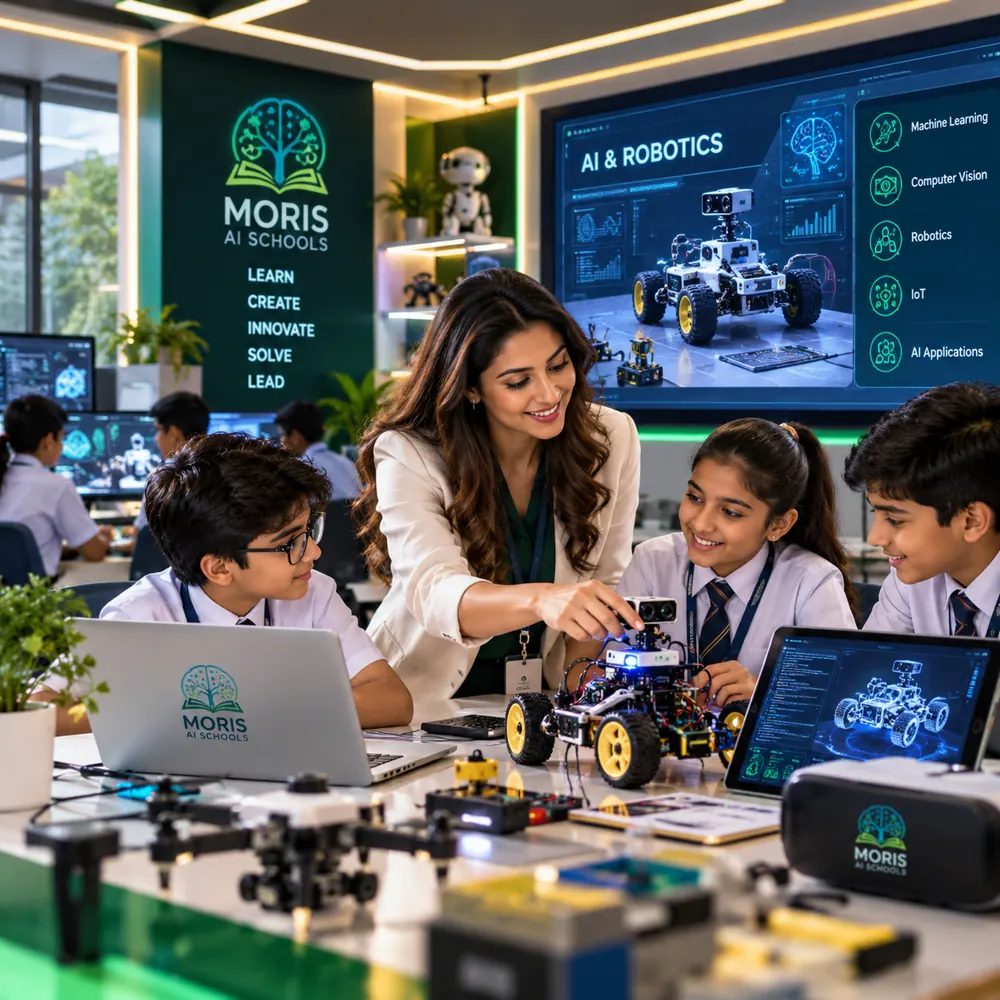
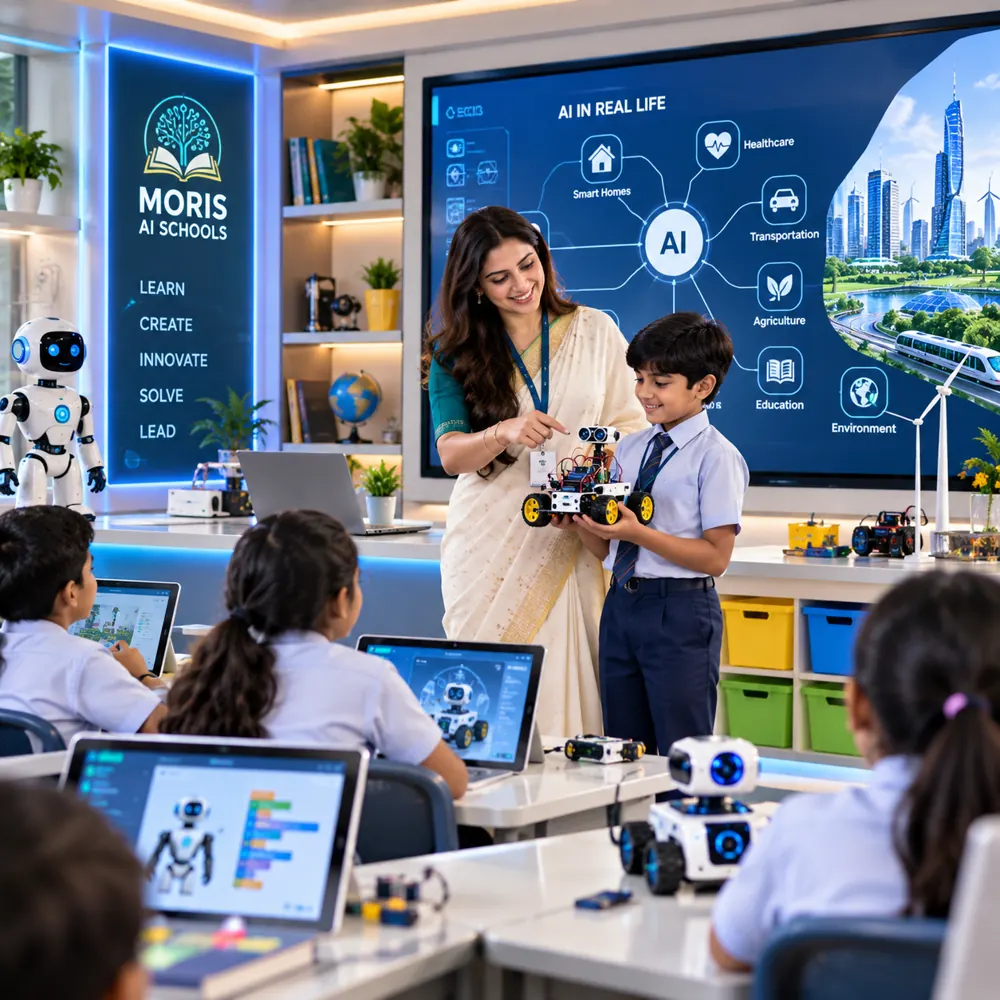
Schools often ask what Moris AI Schools means by transforming a conventional classroom into an AI-enabled environment. The answer can include suitable digital classroom systems, AI-integrated applications, teaching support tools, educator training, engaging learning activities and processes that help staff use technology responsibly. The exact combination should depend on the institution's needs rather than a fixed equipment list.
Colleges and universities frequently ask about AI research labs. A useful lab requires more than hardware. It needs a defined academic purpose, faculty participation, student access, projects, operating processes and learning goals. Institutions may also need digital libraries, AI-assisted administration, professor training and internship connections.
Government schools may ask whether the approach differs from private schools. The educational principles can be similar, but scale, access, procurement, infrastructure and teacher support may require different planning. E-learning platforms have another set of considerations around remote delivery and digital engagement.
For institutions in Ohio, the best starting point is usually to identify the educational or operational problem before selecting technology. Moris AI Schools can then discuss whether the priority is classrooms, teacher capability, labs, administration, student programs or a combination.
A practical way to use this guidance is to separate the question into people, purpose, process and proof. Identify who is affected, what outcome is required, what process currently exists and what evidence would show that the next step is useful. For education institutions, this prevents a technology discussion from ignoring teachers and learners. For individuals, it prevents a certificate choice from being separated from the skill they actually want to build. For businesses and partners, it keeps the conversation connected to responsibilities and measurable work rather than broad claims.
Moris AI Schools should also make room for questions that reveal a mismatch. A visitor may discover that the immediate need is foundational training before infrastructure, or that a self-help resource answers the question without a consultation. That is still a useful outcome. Clear support creates value when it helps people make a better decision, including the decision to prepare further before proceeding.
Practical AI education should strengthen human teaching rather than bypass it.
Teachers commonly ask whether AI will make their role less relevant. Moris AI Schools approaches teacher development from the opposite direction: educators need practical understanding so they can guide students, evaluate outputs, design better learning activities and remain confident as technology changes. Training should help teachers use AI where it adds value and recognize where human judgment is necessary.
Professors may ask whether training is different at college or university level. Higher education can require deeper attention to research, disciplinary applications, project supervision and academic integrity. Online educators may focus more on remote engagement, content workflows and learner support.
Parents often ask whether AI will make children dependent on technology. That risk exists when tools are used without purpose or boundaries. Responsible education should continue to require thinking, questioning, verification, creativity and communication. AI can support learning, but it should not become a substitute for effort or teacher guidance.
Across United States, families and educators will have different views about acceptable use. Institutions should communicate expectations clearly and review them as tools change. Moris AI Schools can help educators build the understanding needed to make those conversations more informed.
A practical way to use this guidance is to separate the question into people, purpose, process and proof. Identify who is affected, what outcome is required, what process currently exists and what evidence would show that the next step is useful. For education institutions, this prevents a technology discussion from ignoring teachers and learners. For individuals, it prevents a certificate choice from being separated from the skill they actually want to build. For businesses and partners, it keeps the conversation connected to responsibilities and measurable work rather than broad claims.
Moris AI Schools should also make room for questions that reveal a mismatch. A visitor may discover that the immediate need is foundational training before infrastructure, or that a self-help resource answers the question without a consultation. That is still a useful outcome. Clear support creates value when it helps people make a better decision, including the decision to prepare further before proceeding.
Learning value depends on practical application, participation and effort.
Prospective learners often ask whether Moris AI Schools focuses on theory or practical work. The stated philosophy emphasizes practical exposure and the ability to use knowledge in real situations. That can include applied tasks, projects, tool use, departmental exposure and learning connected to actual professional functions, depending on the program.
Students also ask how internships work. The broader model is intended to help participants gain practical exposure and understand where their interests and strengths may fit. Specific internship availability, selection, responsibilities and duration should be confirmed through the applicable program information rather than assumed from a general description.
A common career question is whether participation guarantees a job. Employment outcomes should never be treated as automatic without the exact current terms, eligibility requirements and conditions of a specific program. Skills, performance, professional conduct, role availability and suitability can all matter. Visitors should request written clarification of any employment-related commitment before relying on it.
In 2026, this transparency is especially important because education marketing frequently uses aggressive placement language. Moris AI Schools should distinguish the practical value of training and exposure from outcomes that depend on additional factors.
A practical way to use this guidance is to separate the question into people, purpose, process and proof. Identify who is affected, what outcome is required, what process currently exists and what evidence would show that the next step is useful. For education institutions, this prevents a technology discussion from ignoring teachers and learners. For individuals, it prevents a certificate choice from being separated from the skill they actually want to build. For businesses and partners, it keeps the conversation connected to responsibilities and measurable work rather than broad claims.
Moris AI Schools should also make room for questions that reveal a mismatch. A visitor may discover that the immediate need is foundational training before infrastructure, or that a self-help resource answers the question without a consultation. That is still a useful outcome. Clear support creates value when it helps people make a better decision, including the decision to prepare further before proceeding.
Leaders need enough knowledge to evaluate technology and marketing decisions.
Business owners often ask why they need AI education if they already employ technical or marketing teams. A decision-maker does not need to perform every specialist task, but they do need enough understanding to evaluate proposals, ask useful questions, identify unrealistic claims and understand how technology affects departments. Without that knowledge, founders can become dependent on employees or vendors for decisions they remain accountable for.
Corporate learning can therefore focus on leadership awareness, team capability, marketing and PR understanding, practical AI use and department-specific needs. The appropriate program depends on the organization, roles involved and decisions participants need to make after training.
Companies may also ask whether Moris AI Schools can train an existing team rather than only individuals. Corporate learning is intended to address organizational audiences as well, subject to the scope and requirements agreed for the engagement. The initial discussion should identify functions, current capability and intended outcomes.
This is where the wider Digital Doctors methodology can be relevant: diagnose the business problem before prescribing training. A team does not need an AI session merely because AI is popular. It needs learning that addresses real decisions, workflows or capability gaps.
A practical way to use this guidance is to separate the question into people, purpose, process and proof. Identify who is affected, what outcome is required, what process currently exists and what evidence would show that the next step is useful. For education institutions, this prevents a technology discussion from ignoring teachers and learners. For individuals, it prevents a certificate choice from being separated from the skill they actually want to build. For businesses and partners, it keeps the conversation connected to responsibilities and measurable work rather than broad claims.
Moris AI Schools should also make room for questions that reveal a mismatch. A visitor may discover that the immediate need is foundational training before infrastructure, or that a self-help resource answers the question without a consultation. That is still a useful outcome. Clear support creates value when it helps people make a better decision, including the decision to prepare further before proceeding.
Participation routes have different responsibilities and should not be confused.
A prospective partner may ask whether they can represent Moris AI Schools in their city, state or country. The affiliate model is intended to support regional participation, but an enquiry does not itself create an approved partnership. Prospective partners should be prepared to discuss their region, background, audience, operating capability and ability to follow Moris AI Schools standards.
The Digital Ambassador Program is a different participation route. Ambassadors may support awareness, community engagement and responsible communication around Moris AI Schools activities, subject to the applicable program terms. The exact role should be confirmed before anyone represents themselves publicly as an ambassador.
Alumni and community participants may ask how they can remain involved after learning. Opportunities can include continued learning, community participation, sharing verified experiences or contributing to relevant activities where available. Public success stories should be based on real, permissioned experiences rather than invented or exaggerated outcomes.
Visitors in United States should use the relevant page for current participation information. Where status, availability or approval can change, direct confirmation is more reliable than assuming that older information remains current.
A practical way to use this guidance is to separate the question into people, purpose, process and proof. Identify who is affected, what outcome is required, what process currently exists and what evidence would show that the next step is useful. For education institutions, this prevents a technology discussion from ignoring teachers and learners. For individuals, it prevents a certificate choice from being separated from the skill they actually want to build. For businesses and partners, it keeps the conversation connected to responsibilities and measurable work rather than broad claims.
Moris AI Schools should also make room for questions that reveal a mismatch. A visitor may discover that the immediate need is foundational training before infrastructure, or that a self-help resource answers the question without a consultation. That is still a useful outcome. Clear support creates value when it helps people make a better decision, including the decision to prepare further before proceeding.
Responsible participation needs judgment, verification and careful data use.
Visitors often ask whether they should share documents or personal information when requesting support. Initial enquiries should contain only the context needed to understand the question. Sensitive student records, confidential business material, identity documents and unnecessary personal data should not be sent unless an appropriate process specifically requires them.
Another common question concerns the accuracy of AI outputs. AI systems can produce incomplete or incorrect information. Learners and educators should verify important outputs, understand source quality and retain human responsibility for decisions. This is especially important in education, administration and business contexts where errors can affect other people.
If an FAQ does not answer a specific situation, the visitor should use Contact Us or the Help Center rather than guessing. Institutional questions often require context about users, infrastructure and objectives. Program questions may depend on current availability or eligibility. Media and partnership enquiries have their own routes.
In 2026, responsible AI literacy includes knowing when not to rely on a tool. Moris AI Schools can teach practical use, but good judgment remains central. The most useful next step is the one that matches the actual question rather than the most technologically complex option.
A practical way to use this guidance is to separate the question into people, purpose, process and proof. Identify who is affected, what outcome is required, what process currently exists and what evidence would show that the next step is useful. For education institutions, this prevents a technology discussion from ignoring teachers and learners. For individuals, it prevents a certificate choice from being separated from the skill they actually want to build. For businesses and partners, it keeps the conversation connected to responsibilities and measurable work rather than broad claims.
Moris AI Schools should also make room for questions that reveal a mismatch. A visitor may discover that the immediate need is foundational training before infrastructure, or that a self-help resource answers the question without a consultation. That is still a useful outcome. Clear support creates value when it helps people make a better decision, including the decision to prepare further before proceeding.
Quick answers
Moris AI Schools is a Moris Media brand focused on practical AI education, institutional transformation, educator development, student capability, professional learning and business decision-making.
No. Programs and solutions are designed for schools, colleges, universities, teachers, professors, students, professionals, business teams and decision-makers.
No. Courses are one part of the ecosystem. Moris AI Schools also supports smart classrooms, AI research labs, digital libraries, educator training, institutional transformation, practical learning and corporate development.
Yes. Institutions can enquire about classroom technology, learning environments, faculty capability, research infrastructure, digital resources and implementation planning based on their requirements.
Educator development can include practical AI use for lesson preparation, research, presentations, content development, assessment workflows, learner communication, prompt engineering and responsible review of AI-generated material.
Learning can cover role-specific AI use, research, communication, presentations, prompt engineering, digital marketing, PR, social media management, automation, analysis, team workflows and decision-making.
Internship opportunities may be available through the relevant program. Eligibility, selection, participation and outcomes depend on program terms, performance requirements and available opportunities.
Yes. Prospective partners can use the Become a Partner route to share their region, audience and partnership interest. Individual partner names do not need to be displayed publicly.
The brand is positioned for Pan-India reach and a partner presence across more than 7 countries. Specific availability should be confirmed for the requested program and location.
Use the short callback form or Get Started route and select the requirement closest to your goal. The enquiry can then be directed to the appropriate school, educator, student, professional, business or partnership team.
Still Have a Question About Moris AI Schools
Move from a broad question to the right information, support route or conversation.
Tell Moris AI Schools what you need to understand, improve or evaluate. Clear context helps connect your question with a useful next step without unnecessary delays.

One Simple Contact Form. The Right Route From the Start.
Tell us what your enquiry is about and give us a way to reach you.
General Contact & Consultation
How Can We Help?
Thank you
Your enquiry has been received. The Moris AI Schools team can route it according to the topic you selected and contact you using the details provided.
More in Support & Connect
Back to Home
Tell us what you need so your enquiry reaches the team with relevant context.
Explore
Understand programs, support routes and requirements before choosing your next step.
Explore
Find factual context, press information and the right route for focused media requests.
Explore
Find the right contact path for education, careers, partnerships, institutions and media.
Explore