
Who We Are
Meet the Moris Media Brand Building Practical AI Capability
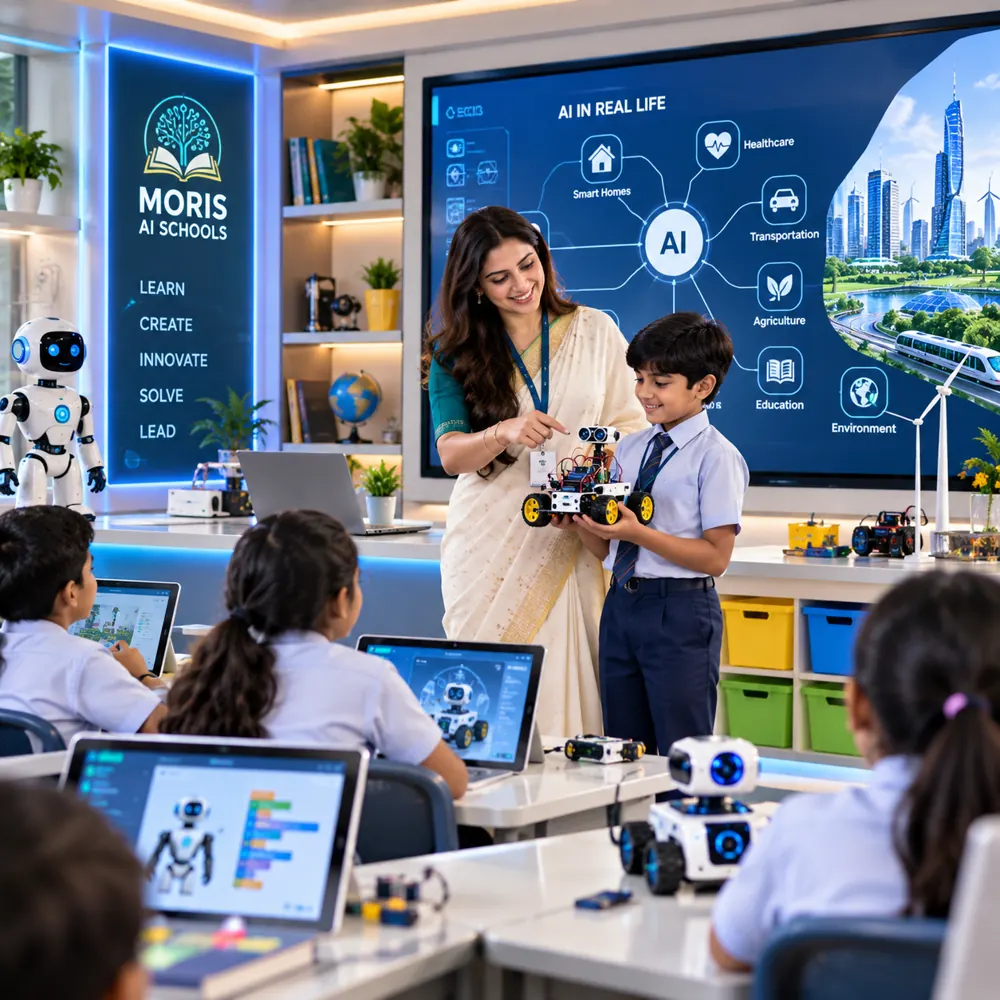
Moris AI Schools connects education, technology and real-world capability for people.
A Moris Media brand built to help institutions, educators, students, professionals and business leaders turn AI knowledge into practical, responsible capability.


Who We Are: Practical AI Education Built for Real Use
Moris AI Schools exists to close the gap between knowing about AI and using it well.
Moris AI Schools is an education and workforce-development brand of Moris Media, created to help people and institutions move from knowing about artificial intelligence to using it responsibly in real environments. AI education should not end with a certificate, a recorded lesson or a list of tools. Schools need teachers who know how technology fits into teaching. Colleges and universities need practical infrastructure, faculty capability and research environments. Students need exposure to actual work. Professionals need skills that remain useful inside changing roles. Business leaders need enough AI understanding to make better decisions instead of depending entirely on technical teams or vendors.
Our focus is practical AI education connected with implementation. We work across the education and professional ecosystem, bringing together learning, technology, institutional transformation, workforce development and business capability. That means our role can begin inside a classroom, continue through an AI research lab, support an educator, guide a student toward practical exposure, help a professional apply AI at work or help a business leader understand how AI affects people, processes, marketing, communication and decisions.
We are not building another place where people simply come to study AI. We are building environments where people learn how to work with AI. In 2026, that distinction matters because access to tools is becoming easier, but responsible judgment, practical application and the ability to connect technology with real responsibilities remain harder to develop. Moris AI Schools is designed around those capabilities.
A Moris Media Brand Connected With Operational Reality
The relationship with Moris Media brings a wider business perspective into learning.
Moris AI Schools carries the practical business perspective of Moris Media into education and professional development. That relationship matters because AI capability cannot be developed only through theory. Someone may understand what an AI tool does and still struggle to decide where it belongs in a real workflow. A student may complete several courses without understanding how departments actually operate. A manager may know AI terminology but remain unable to evaluate whether an employee, vendor or proposed solution is producing useful work.
Moris AI Schools addresses the difference between information and capability. The Moris Media connection gives the brand a broader operational perspective across business functions and professional environments. For students, that can mean understanding departments, responsibilities, communication and professional expectations. For educators, it means connecting AI with lesson preparation, student engagement, assessment, research and academic responsibility. For professionals, it means applying AI to the requirements of their own roles instead of collecting disconnected tools.
For decision-makers, the perspective becomes wider again: they need enough understanding of AI, marketing, PR, people, operations and delegation to ask better questions and make more informed decisions. Moris AI Schools develops capability. Moris Media provides the connection to operational thinking and real-world professional context where appropriate. This is what makes the brand broader than a conventional course catalogue.
Our Numbers Represent the Breadth Behind the Brand
Numbers have value when they explain the environments and opportunities behind learning.
Numbers should not exist on a website simply to make a brand appear larger. For Moris AI Schools, the useful story behind a number is the range of industries, departments, learning environments and practical situations that can inform education. Moris Media has provided the brand context for cross-industry and cross-functional exposure, and those figures should be presented only in their current internally approved form.
50+ Industries can communicate cross-industry perspective. Different sectors use AI differently because their customers, responsibilities, risks, data and operating environments differ. Exposure to that variety helps learners understand that AI is not one universal workflow. The value lies in learning how to ask what the technology is supporting, who remains responsible and what good performance looks like in that environment.
752 Departments can communicate the breadth of functional exposure described for the Moris Media ecosystem. Organizations work through interconnected departments, not isolated job titles. Understanding different functions can help learners see where AI may support research, communication, operations, marketing, administration, analysis and management. Before publication, this number and every additional achievement counter should be checked against Moris Media current approved records.
Brand Numbers for Website Display
50+
Industries
Cross-industry perspective that helps connect AI learning with different business and professional environments.
752
Departments
Cross-functional exposure that can help learners understand how real organizations divide responsibilities and coordinate work.
{insert approved countries served}
Countries / Markets
Use the current verified international footprint approved by Moris Media.
{insert approved learners trained}
Learners Developed
Use only a verified definition of trained or completed learners; do not combine enquiries or registrations unless disclosed.
{insert approved institutions supported}
Institutions Supported
Use the verified number of qualifying schools, colleges, universities or educational organizations supported.
{insert approved practical training hours}
Practical Learning Hours
Use a verified cumulative figure only if Moris AI Schools maintains a defensible measurement method.
More Than Courses: An AI Education Transformation Ecosystem
Individual learning matters, but institutions also need systems, people and implementation.
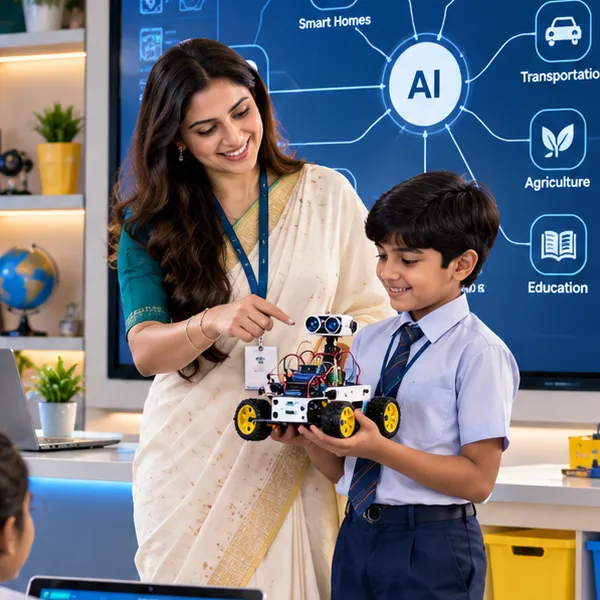
The easiest way to enter AI education is to create a course. The harder work is helping an institution actually use AI. Moris AI Schools is built for that harder work. For a school, AI transformation can involve classroom technology, teacher readiness, responsible student use, digital resources and administrative processes. Installing technology without preparing teachers can create expensive infrastructure that remains underused because the educational purpose was never defined.
For colleges and universities, the requirement becomes broader. Institutions may need AI-enabled classrooms, research labs, digital libraries, faculty development, practical student projects and stronger connections between academic learning and professional requirements. Teachers and professors need another kind of support: they should be able to use AI without losing the human judgment, subject expertise and educational responsibility that define good teaching.
Students need opportunities to discover what they are good at, understand how professional teams operate and apply knowledge through practical work. Professionals need role-specific capability. Businesses need informed decision-makers. Courses can be part of this system, but they are not the entire system. Moris AI Schools is designed to connect the pieces so education can move from content delivery toward actual capability.
From Classrooms to Careers Through Practical Exposure
Learning becomes stronger when people understand where knowledge must eventually be used.
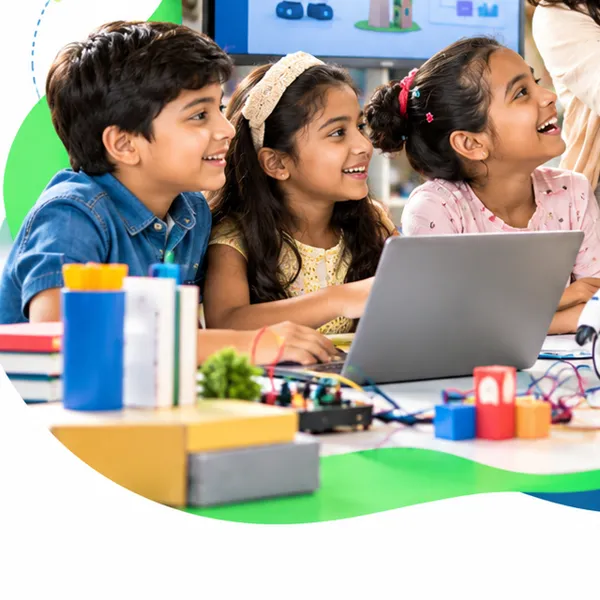 Classroom to career
A learner can understand AI academically and still be unprepared for professional responsibility. That is why practical exposure is an important part of the Moris AI Schools philosophy. Students should understand how work moves through departments, why deadlines matter, how teams communicate, how quality is evaluated and why professional judgment cannot simply be delegated to a tool.
Internships and practical learning pathways can help students identify their interests and strengths before making major career decisions. A learner interested in marketing should understand marketing work. Someone interested in technology should experience technology-related responsibilities. A student drawn toward research should learn how research questions, evidence and validation work. Someone interested in operations should understand processes and coordination.
The useful question is not only which AI course a learner should take. It is what kind of work the learner can become capable of doing well and how AI can strengthen that capability. Where internship, career or employment pathways are offered, participation and outcomes should always be governed by the applicable program terms, eligibility requirements, performance expectations and available opportunities. Capability should be built without turning career development into an unrealistic guarantee.
Educators Stay Central to Responsible AI-Enabled Learning
Technology should strengthen teachers and professors rather than reduce their responsibility.
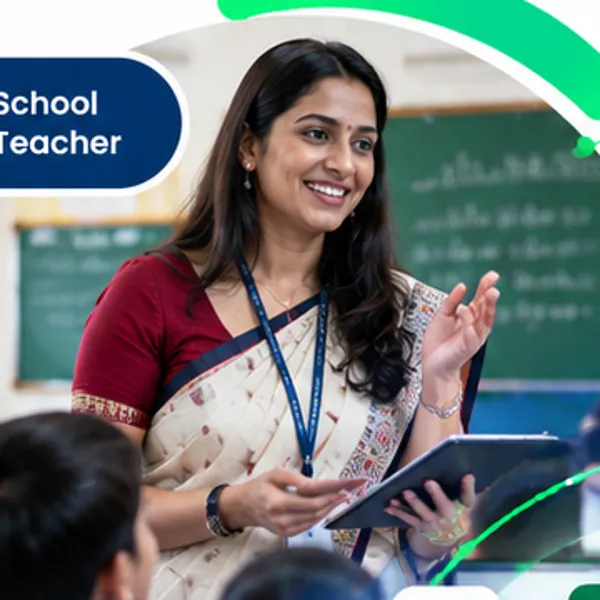
Moris AI Schools does not see teachers as an obstacle between students and technology. Educators remain central to responsible AI-enabled education. A teacher understands the classroom in ways software cannot. Educators understand student behaviour, learning difficulties, subject context, motivation and the responsibility involved in assessment. The challenge is ensuring that teachers remain technically capable as educational technology changes.
That is why Moris AI Schools supports practical development for school teachers, college professors, online educators and corporate trainers. Training should help educators understand where AI saves time, where it improves preparation, where it can support student engagement and where human review remains essential. A teacher should be able to question an AI-generated answer. A professor should understand implications for research and academic integrity. An online educator should know how technology can support learners without making education impersonal.
The objective is not to turn every educator into an AI engineer. The objective is to make educators informed and capable enough to lead learning in an AI-enabled environment. In Ohio, institutions can use this principle to evaluate professional development: the important outcome is whether educators can make sound choices in their actual teaching context.
AI Capability for Professionals and Business Decision-Makers
Better tools create more value when people also develop stronger professional judgment.
AI is changing professional work, but knowing how to open an AI application is not the same as knowing how to make a good business decision. Professionals need to understand how AI relates to their own responsibilities. Decision-makers need an even broader view. A business leader may not personally build an AI system, but that leader still needs to decide what should be automated, which information is sensitive, whether an employee's work is reliable, whether a vendor's proposal makes sense and whether technology is genuinely improving the business.
The same principle applies to marketing and public relations. AI can accelerate content, research and analysis. It cannot remove the need to understand customers, reputation, communication, positioning or crisis response. Moris AI Schools therefore approaches professional education through capability and judgment, not tool memorization. For young professionals, this can mean becoming more useful within their roles. For government employees, responsible use, accuracy, confidentiality and accountability become especially important.
For freelancers and entrepreneurs, AI capability can support research, operations, communication, client management and business decisions. For corporate professionals, it can strengthen role-specific performance and cross-functional understanding. For founders and senior leaders, education can extend to hiring, delegation, team evaluation, marketing, PR, operational thinking and responsible AI adoption. People should understand the technology well enough to remain responsible for the decisions made with it.
What Makes the Moris AI Schools Approach Different
Practical implementation matters more than technology theatre or impressive terminology.
AI education can become impressive very quickly. Screens can be installed. Tools can be demonstrated. Certificates can be issued. New terminology can be added to brochures. None of those things alone proves transformation. Moris AI Schools looks at a more demanding question: what can people actually do differently after the technology, training or program is introduced?
Can teachers use it confidently? Can students apply what they learned? Can professors guide responsible research? Can administrators improve workflows without weakening privacy or accountability? Can professionals perform better work? Can managers evaluate AI-supported work instead of accepting outputs blindly? Can business leaders make more informed decisions? Can an institution continue using the system after the initial implementation? These questions keep practical value at the centre.
Technology should have a purpose. Training should change capability. Infrastructure should be used. Learning should connect with work. AI should support human judgment rather than become an excuse to stop using it. Across United States, Moris AI Schools can serve different audiences and institutional contexts, but this practical standard remains consistent.
One Ecosystem With Different Paths for Different People
Institutions, educators, learners and leaders need different routes to practical capability.
Moris AI Schools brings several audiences into one connected education ecosystem. Schools can work toward AI-enabled teaching environments rather than treating AI as a single computer subject. Colleges and universities can develop classrooms, laboratories, faculty capability, research environments and practical student learning. Teachers and professors can strengthen their ability to use AI responsibly in teaching and academic work.
Students can build practical capability and understand professional environments through structured learning and relevant exposure. Professionals can learn AI according to the responsibilities they actually perform. Businesses can develop employees, managers and decision-makers who understand how technology affects operations, marketing, communication and leadership. Partners and affiliates can help extend relevant education into their regions and communities under defined program standards.
Different audiences require different learning paths, but they share one principle: AI becomes valuable when people know what to do with it. In Columbus, that may begin with a school, educator, learner, professional or business leader asking a very different question. The role of Moris AI Schools is to connect that starting point with practical development rather than force every audience into the same program.
Know the Brand Built Around Practical AI Capability
See how Moris AI Schools connects education, work and responsible AI practice.
Moris AI Schools, a Moris Media brand, brings practical AI education to institutions, educators, learners, professionals and decision-makers through capability-focused learning and implementation.